
Starfield Guide (After 1000+ Hours): What Actually Matters

Introduction
After spending well over 1000 hours in Starfield, I’ve gone through everything the game throws at you—slow early progression, confusing systems, and eventually the point where everything just clicks.
At first, it feels like a typical open-world RPG. But the longer you play, the more you realize how much depth is hidden beneath the surface. This isn’t a game that explains itself well, and that’s exactly why most players never reach its full potential.
This guide is based on experience, not theory. If something works here, it’s because I’ve tested it over hundreds of hours.
Getting Started the Right Way
One of the biggest mistakes new players make is trying to do everything at once. The game throws a lot at you early on, but not all of it is worth your time.
The main story is actually more important than it seems. Progressing it early unlocks mechanics that make the rest of the game smoother and more enjoyable. Ignoring it for too long can make everything feel unnecessarily slow.
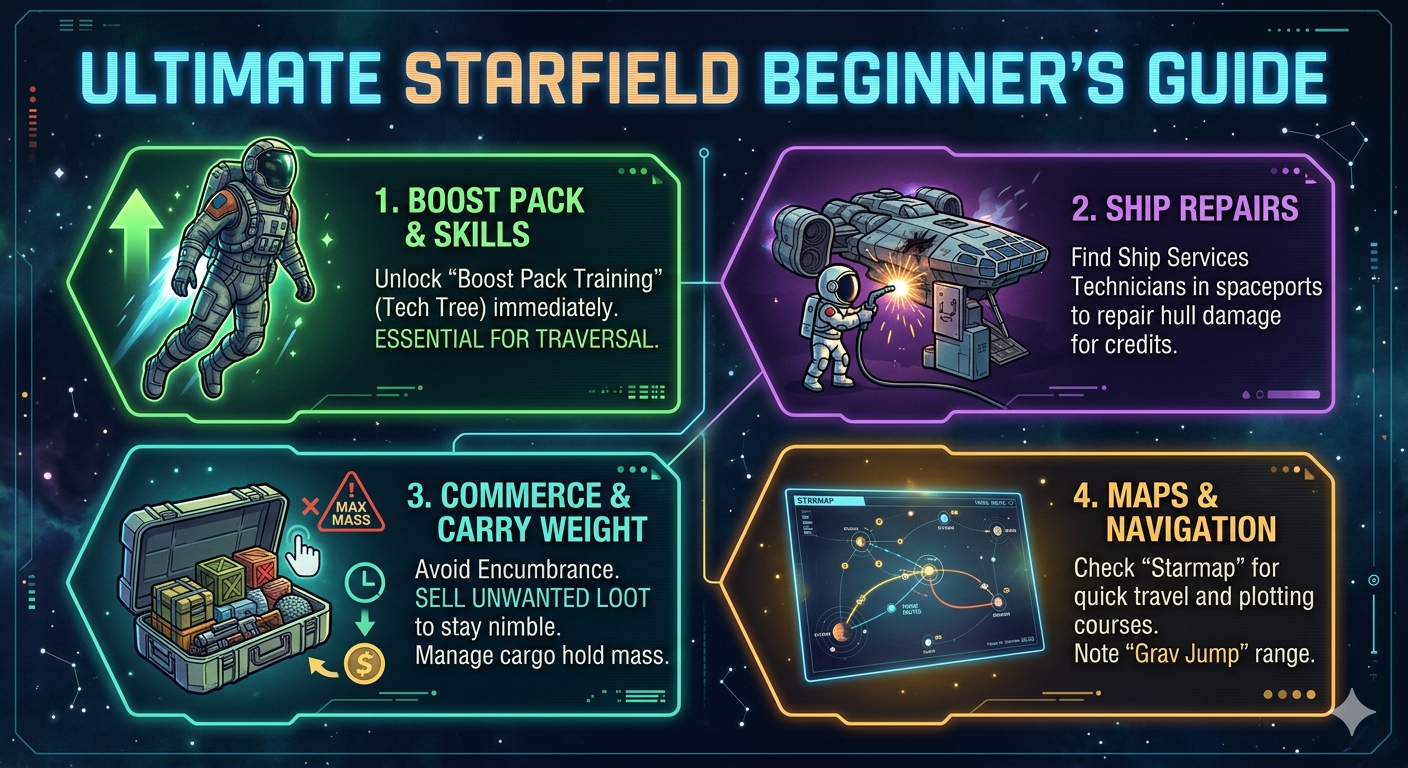
Another thing you’ll notice quickly is how restrictive inventory weight can be. Picking up everything you see might feel right in an RPG, but here it just slows you down. Learning what to ignore is just as important as knowing what to keep.
Mobility also makes a bigger difference than most players expect. Once you get used to using your boost pack properly, both combat and exploration start to feel much more fluid.
Exploration: Where Most Time Gets Wasted
Exploration is one of the best parts of Starfield, but it’s also where players lose the most time without real progress.
Not every planet is worth your attention. Some are genuinely interesting, while others are just variations of the same experience. The trick is learning to recognize the difference early.
Planets with multiple biomes are usually worth exploring because they let you complete surveys faster. Landing strategically instead of randomly saves a surprising amount of time.
It also helps to group your missions. Instead of jumping across systems for one objective at a time, stacking missions in the same area makes progression feel much smoother and less repetitive.
Combat Feels Better Once You Stop Playing It Like a Shooter
At first, combat can feel a bit clunky. That’s mostly because the game doesn’t reward aggressive, run-and-gun playstyles the way other shooters do.
Positioning matters more than aim. Enemies struggle to deal with vertical movement, so using your boost pack intelligently can give you a huge advantage without needing perfect reflexes.
Weapons also behave differently than expected. Ballistic weapons tend to be the most reliable overall, while others are more situational. Finding something that fits your style matters more than chasing raw stats.
Once you stop forcing it to feel like a traditional shooter, combat starts to make a lot more sense.
Ships Change Everything
Ships aren’t just a feature in Starfield—they’re a major part of progression.
Early on, getting a solid ship makes a noticeable difference. Some ships give you an edge right away, especially in combat situations where weaker builds struggle.
Later in the game, customization becomes far more important. Building your own ship allows you to adapt to your playstyle instead of adjusting yourself to a preset design.
That’s when things really open up. Once you understand how ship systems work together, it becomes one of the most satisfying parts of the game.
Leveling Feels Slow… Until It Doesn’t
The early game can feel like a grind, especially if you’re not focusing on the right activities.
Some of the fastest progress actually comes from things players often overlook. Exploration, scanning, and certain mission types can add up quickly if done consistently.
Faction questlines, in particular, stand out. They not only provide solid experience but also introduce some of the more interesting content in the game.
Eventually, progression stops feeling slow and starts feeling steady—you just have to get over that initial hump.
What the Game Does Well (and Where It Struggles)
There’s a lot to appreciate here. The scale of the world, the flexibility in how you play, and the freedom to approach things your own way all stand out.
At the same time, not everything works perfectly. Some areas feel repetitive, especially when procedural content starts to repeat itself. The early pacing can also turn people away before the game really gets going.
Still, if you stick with it long enough, the strengths outweigh the weaknesses.
Final Thoughts
After 1000+ hours, what stands out most about Starfield isn’t just its size—it’s how much better it gets once you understand it.
It’s not a game that rewards rushing. The more you learn how its systems connect, the more enjoyable everything becomes.
Most players only scratch the surface. If you take the time to go deeper, there’s a completely different experience waiting there.